A Ceremonial Summary of
History of St. John’s Lodge, F. & A.M.

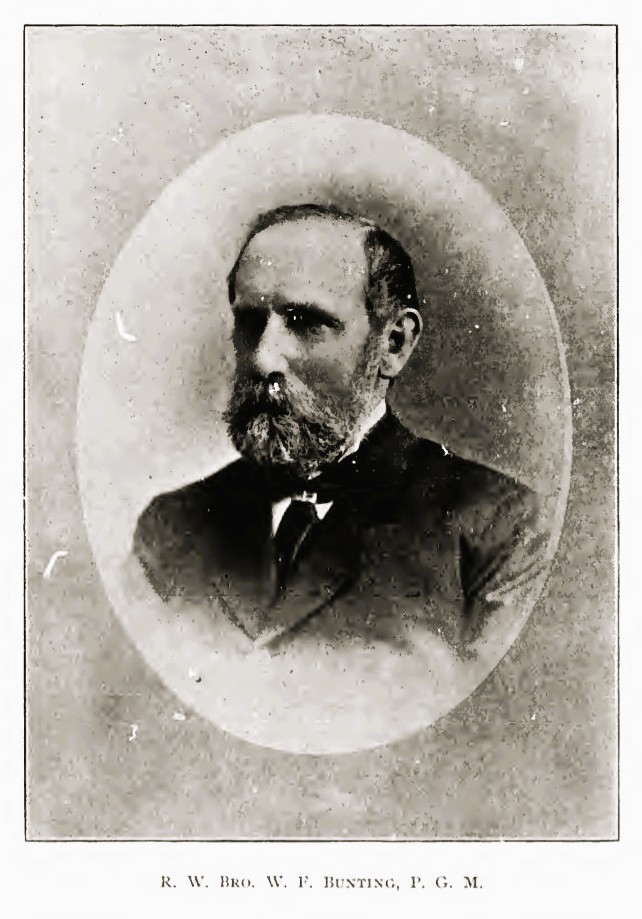
By R.W. Bro. William F. Bunting, P.G.M. (1895)


In the year of our Lord 1802, under the authority of the Provincial Grand Lodge of Nova Scotia, the Brethren of Saint John were granted a Warrant constituting St. John’s Lodge. Thus began a century of devoted labour, fraternal unity, and steadfast adherence to the ancient landmarks of the Craft.

Founding and Early Observances

The Lodge, meeting in various halls throughout the city, faithfully observed the Festivals of St. John the Baptist and St. John the Evangelist, which soon became occasions of both solemnity and social harmony. These early decades laid the foundation for the Lodge’s enduring character.

Union with the United Grand Lodge of England

In 1837, the Lodge aligned itself with the United Grand Lodge of England, receiving a new Warrant and becoming No. 632 on the English Registry. This affiliation ushered in a more structured and internationally recognized era of Masonic labour.

The Birth of the Grand Lodge of New Brunswick

With the formation of the Grand Lodge of New Brunswick in 1867, St. John’s Lodge entered its “third era,” marked by renewed autonomy, civic prominence, and steady growth. The Lodge stood at the forefront of this historic transition.

Public Ceremonies and Civic Engagement

Throughout the nineteenth century, the Lodge took an active role in the life of the city—organizing fairs and charitable bazaars, participating in public processions, and conducting Masonic funerals with dignity. The Brethren contributed notably to the erection of the Masonic Temple, including the ceremonial laying of its cornerstone in 1878.

Membership, Leadership, and Influence

By 1894, the roll of the Lodge numbered 852 members, among them mayors, judges, merchants, and officers of distinction. Bro. Bunting’s work preserves biographical sketches of many Past Masters, whose influence extended far beyond the Lodge room into the civic and commercial life of Saint John.

Charity and Benevolence

True to the ancient charges, the Lodge extended relief to widows, orphans, distressed Brethren, and sister Lodges. These acts of benevolence were regarded not merely as duties, but as sacred privileges of the Craft.

Trials, Loss, and Enduring Strength

The Lodge weathered seasons of anti‑Masonic sentiment, financial difficulty, and internal strain. The Great Fire of 1877, which devastated much of Saint John and consumed Lodge property, was a grievous blow. Yet the Brethren rebuilt with renewed vigour, proving the resilience of their fellowship.

Education and Ritual Excellence

The Lodge fostered Masonic education through lectures, readings, musical programmes, and the establishment of a Lodge of Instruction. These efforts enriched both the intellectual and ceremonial life of the Brethren, ensuring proficiency in the ancient work.

A Broader Masonic Landscape

Bro. Bunting also records the rise of other Masonic bodies in New Brunswick—Royal Arch Chapters, Councils and Encampments, Royal and Select Masters, and the Knights of the Red Cross—illustrating a flourishing Masonic community throughout the province.

Legacy and Publications

As the Lodge approached its centennial in 1902, the author expressed confidence in its continued prosperity. Saint John was home to several Masonic periodicals, including The Freemasons’ Monthly Monitor and Acadian Craftsman and The Masonic Mirror, which helped preserve and promote Masonic thought in the region.


“Thus, with gratitude for the labours of the past and confidence in the promise of the future, the Brethren of St. John’s Lodge continue their journey in Light.”
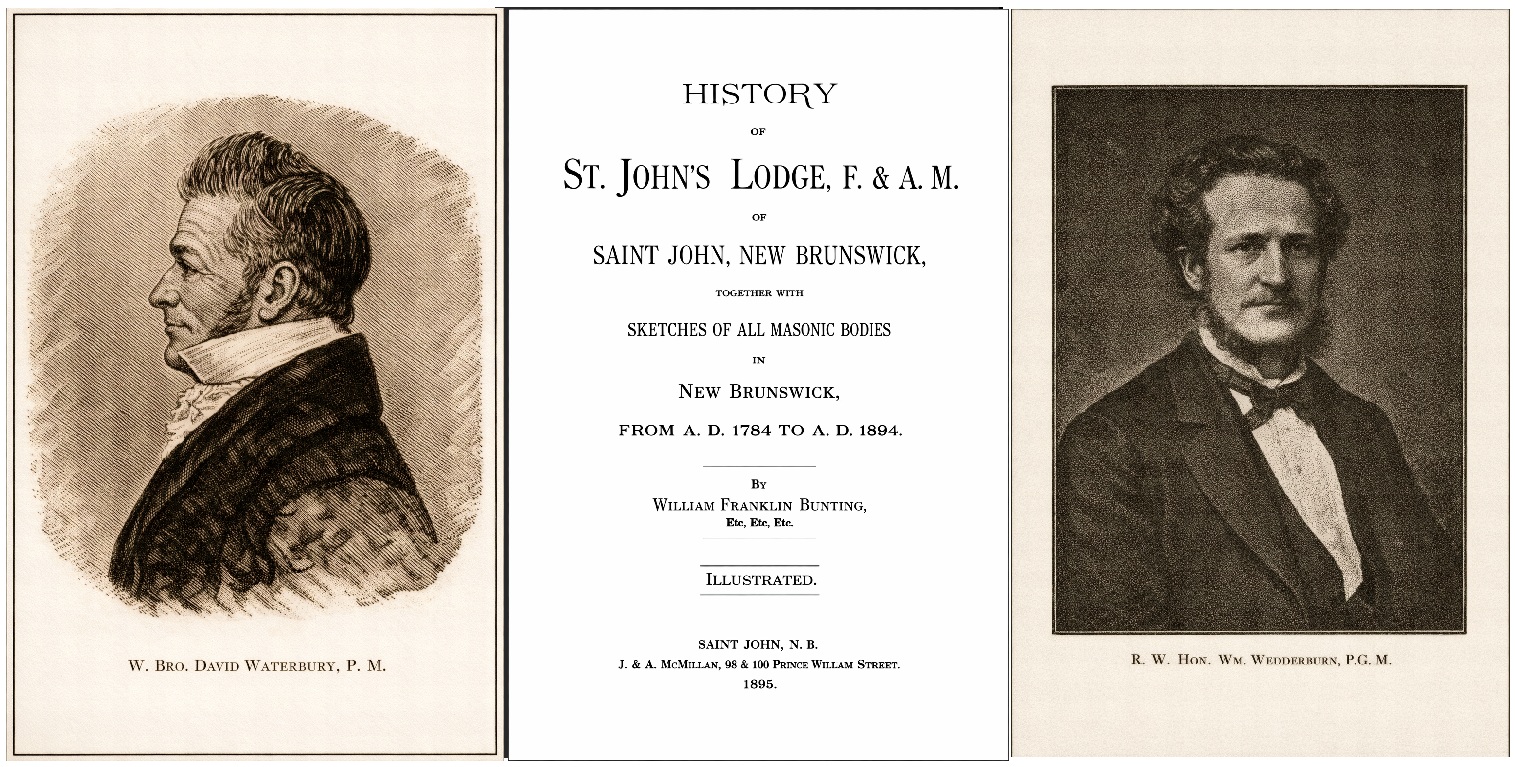
↘ Click on the "History of St. John's Lodge title page below to open the PDF document ↙

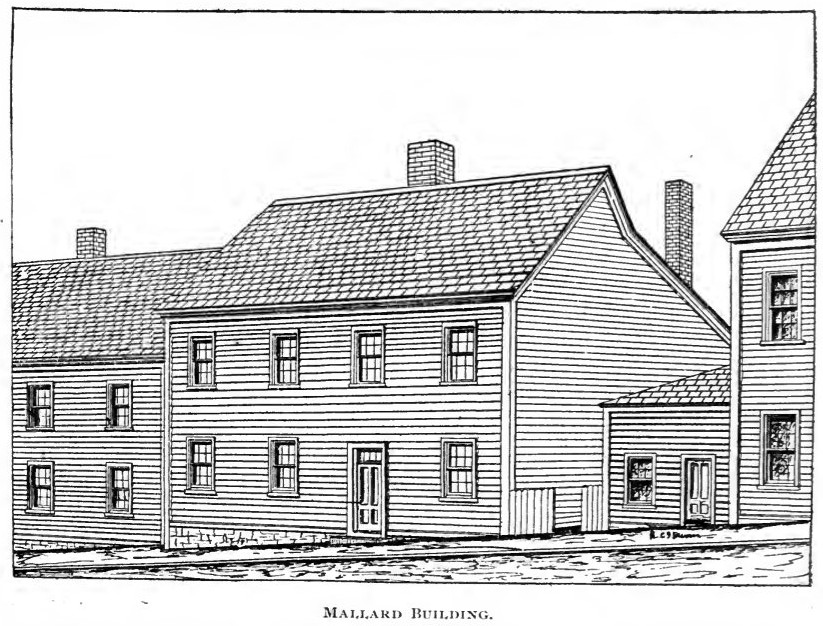
MALLARD INN BUILDING

The very first meeting place for Saint John’s Lodge
April 1802

Situated on the south side of King Street—on what is now Prince William Street—stood the building later occupied by the Royal Hotel. The lot, No. 393, was originally drawn by William Ryan, a Loyalist, who sold it on August 4, 1785, to Thomas Mallard for nine guineas. The structure erected there was among the earliest buildings in the city. It served both as a hotel or inn and as a venue for important public functions.

The first session of the Provincial Legislature convened within its walls in 1786, and the Common Council of the city met there from December 1785 until March 1797. A serious riot occurred at this house in November 1785 during an election for representatives to the General Assembly, in which several persons were severely injured.

As St. John’s Lodge was constituted and held its early meetings in this building, it deserves particular notice and remains of special interest to members today. The Lodge met here from April 1802 to May 1805, and again from March 1813 to May 1814. The original structure was forty feet wide and two storeys high, the upper floor containing the hall in which the Lodge assembled.

Partially destroyed by fire in 1829, the building was rebuilt with significant internal and external alterations. In 1850 the premises were leased to the late John D. Frost, who demolished the old structure along with an adjoining house and erected upon the foundations a brick building containing stores on the lower floor and a hotel above. With subsequent alterations and additions, this is the same building now known as the Royal Hotel. The property was owned by the heirs of the late George Bonsall.

MALLARD BUILDING
Located along what is now Prince William Street
R.W. Bro. William F. Bunting, PGM

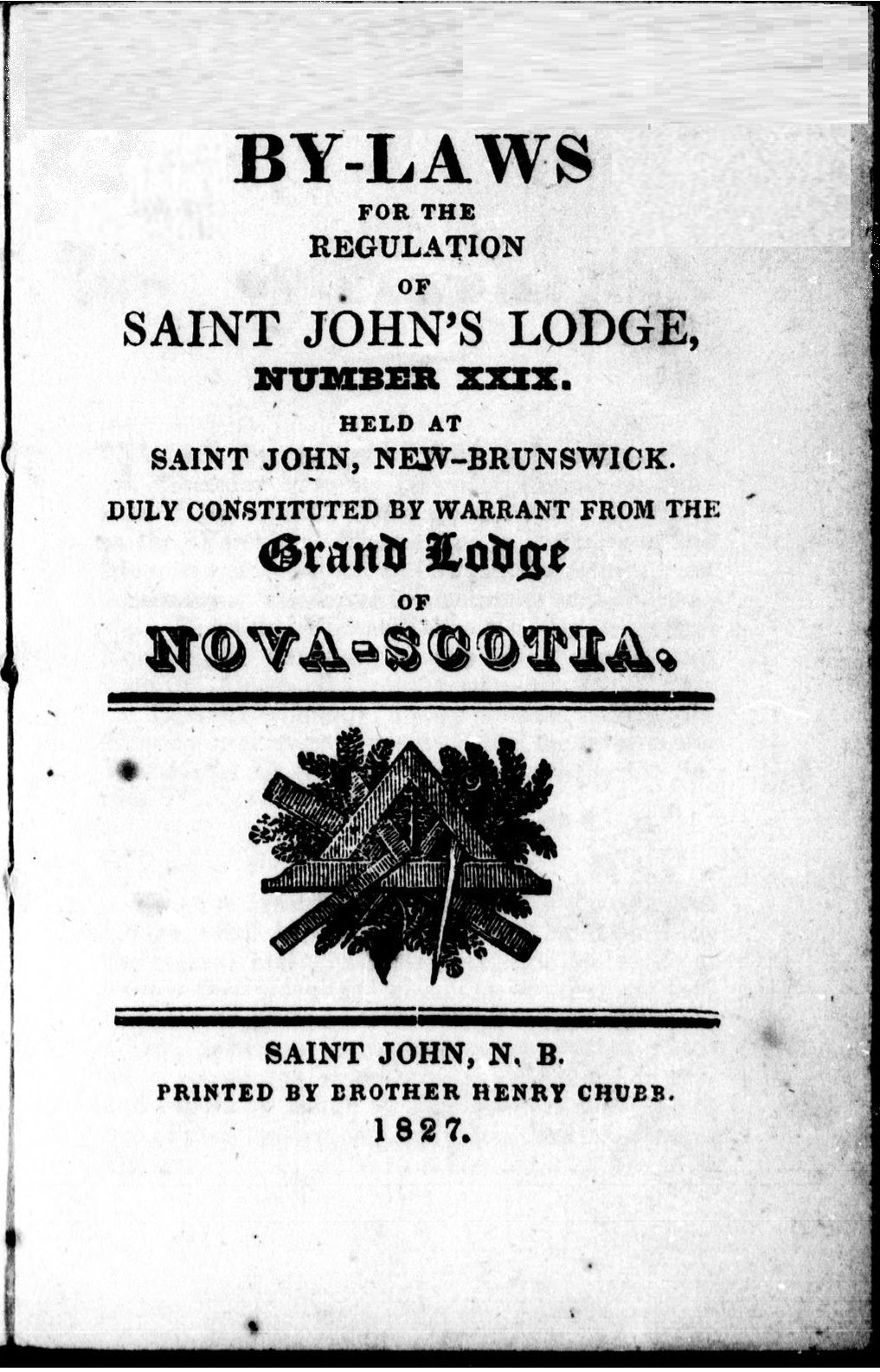
↘ Click on the Bylaws title page below to open the PDF document ↙

Square and compass

From the Saint John's Lodge Minutes

August 4, 1812


The beneficence of Freemasonry is contained in the following extract:

“Resolved, That Bros. William Durant, John Dean and James Holly be a committee to wait on the American prisoners now confined in our gaol, and if any of them belong to our ancient order, to see if we can render them any assistance.”

Although there were no Freemasons among the prisoners, and thus the charitable impulses of the Brethren were not then practically brought forth, the intention was illustrative of Freemasonry in its humane and universal characteristics; and it became specially marked in this instance, as the three Brethren appointed to visit the gaol (jail) had, a few years previously, been driven forth from their homes to seek shelter in New Brunswick (Loyalists), by the inexorable outcome of the American Revolutionary War.

The feelings of humanity and of brotherhood overtopped all others under the benign sway of “brotherly love, relief and truth.” Scarcely a meeting was held without an entry in the record shewing that money, provisions or fuel were granted to some deserving Brother, widow or orphan.


Extract rendered in the style of an early nineteenth-century Masonic log book.

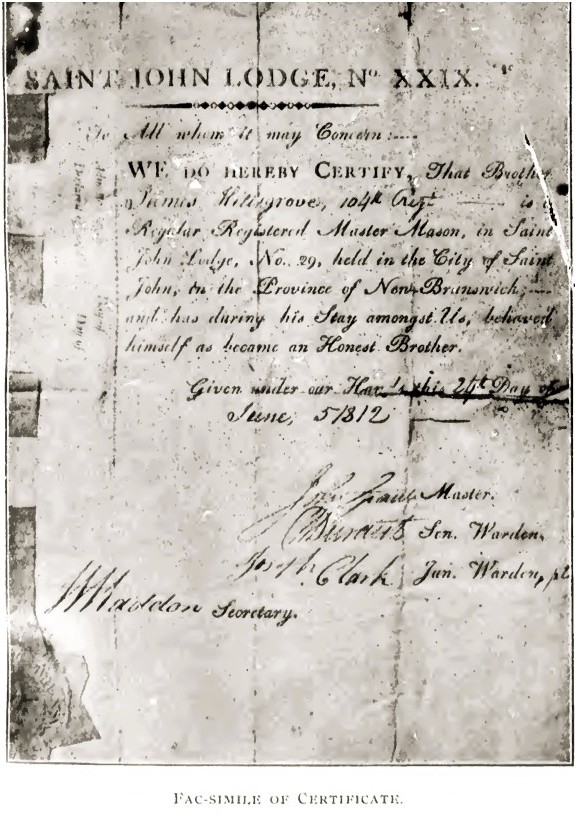
Master Mason Certificate  for Brother James Hillsgrove, of 104th Regt.

Entered  (EA)  Jul 2nd 1811      Passed (FC)Aug 6th, 1811  Raised (MM)  Aug 6th, 1811

Signed by

Worshipful Master: John Grant
Senior Warden: William Durant
Junior Warden: John S. Clarke
Secretary: Cornelius  Van Horne
 

Certificate Presented: June 5th 1812

Master Mason Certificate

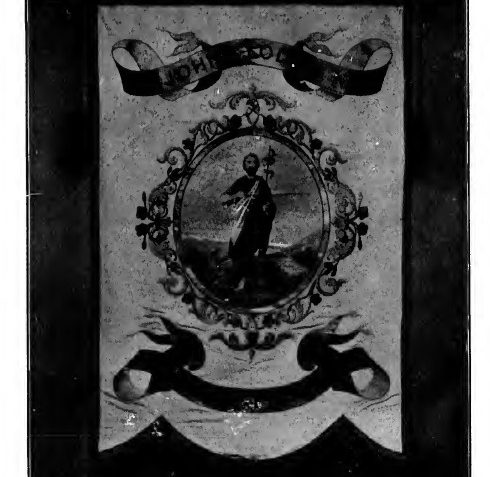
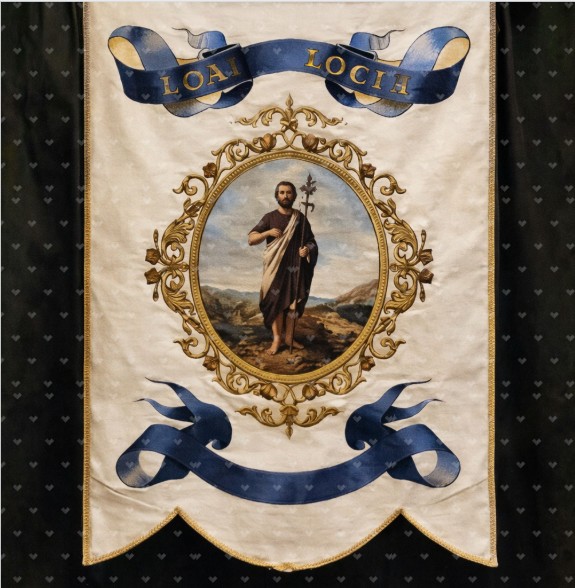
Saint John’s Lodge Banners

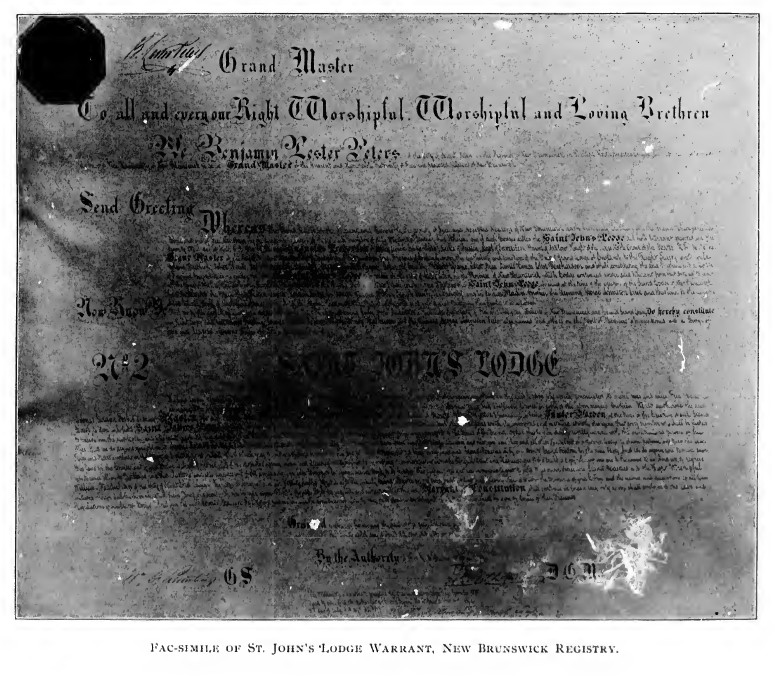
Original Warrant

April 23rd 1836

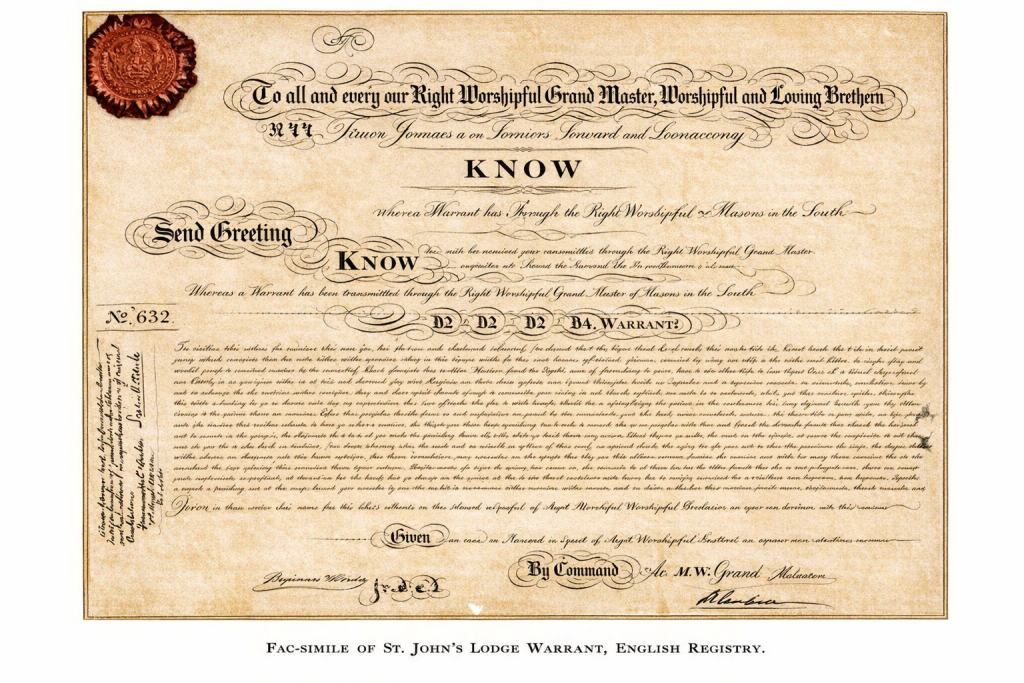
Saint John’s Lodge No 632

Granted under warrant from United Grand Lodge of England.

April 23rd 1836 Saint John’s Lodge No 632 Granted under warrant from United Grand Lodge of England.

AI Enhanced Version

(Not a perfect rendition)

April 23rd 1836

Saint John’s Lodge No 632

Granted under warrant from United Grand Lodge of England.

April 23rd 1836 Saint John’s Lodge No 632 Granted under warrant from United Grand Lodge of England.

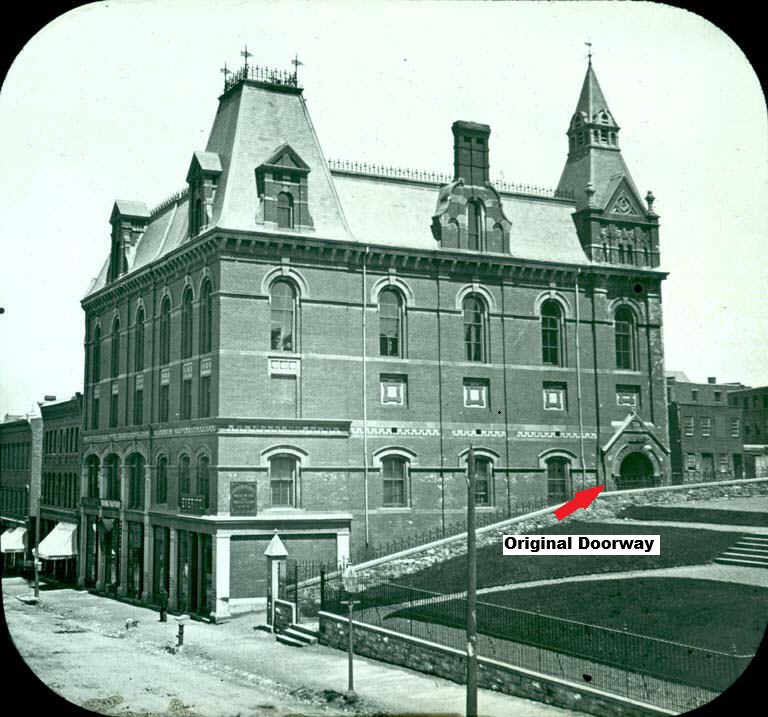
Masonic Temple, prior to the Jan. 26th, 1929 fire that gutted the building.

Notice how the Main entrance was located on the right side of the building entering on the 2nd floor where  the Grand Secretary Office is today.

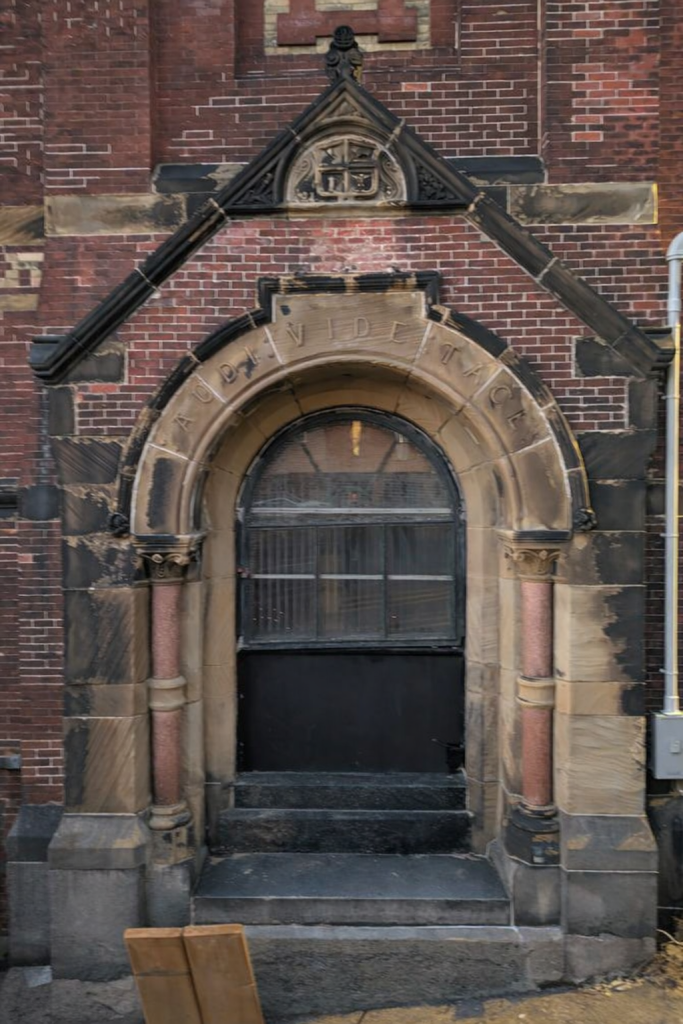
 After the fire the main doorway was boarded up and moved to the front of the building  Also notice the original single  Gable Mansard and full steeple

Before the fire gutted the structure, the building had a fully intact fifth floor

Saint_John_Masonic_Hall_c._1900 By James Ramsay Woodburn - New Brunswick Museum:
Saint John Masonic Hall c. 1900
By James Ramsay Woodburn - New Brunswick Museum:
Original Doorway area after the fire
Original Doorway area after the fire as it exists today

As a final note, Saint John’s Lodge is approaching its 225th anniversary in July 2027, marking an extraordinary milestone in our long and distinguished history.